Hardened networks shouldn't cost five figures a year.
The tooling that keeps a network safe — access control, a firewall, intrusion detection, immutable logs, managed wireless, physical access evidence — is sold to small teams at enterprise prices, then rented back to them every year through licences, support contracts, and per-device cloud fees.
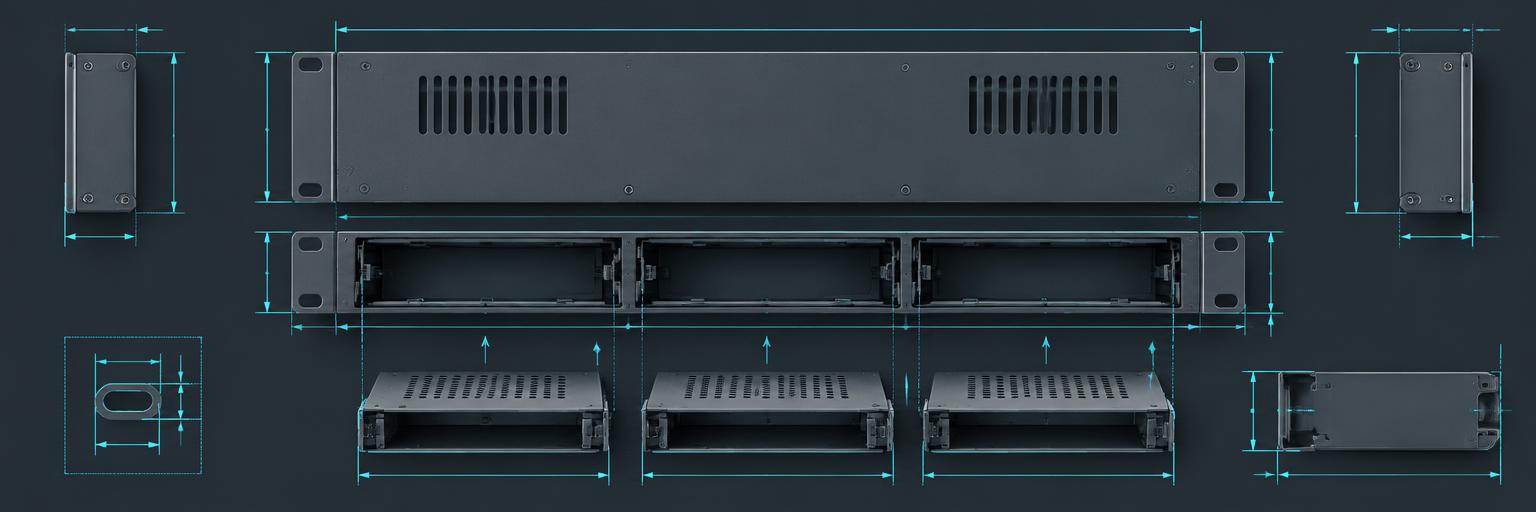
PortGuard covers the same jobs with single-purpose, bare-metal PoE modules that slide into one 1U frame. You buy the capability once, it runs locally, and it never stops working because an invoice went unpaid.
The sticker price is the smallest part of the bill.
Four costs show up after the purchase order is signed. Together they usually exceed the hardware itself over a five-year life, and they are the reason small IT budgets never get past the quote stage.
The licence cliff
Appliance licences renew yearly. Miss a renewal and features are disabled, dashboards lock, and hardware you already paid for degrades into a paperweight.
The support tax
Smart Net, Enterprise Agreements, and support contracts commonly add 15–25% of hardware list price every single year, whether or not you ever open a ticket.
The labour treadmill
Every Linux-based appliance is an OS you must patch, harden, and audit. That recurring maintenance is the single largest line item most budgets never write down.
The complexity premium
Controllers, cloud tenants, RADIUS servers, and licence portals mean you often need a consultant just to turn the features on. Deployment cost rivals the hardware.
Same problem. A fraction of the budget.
Each row is a job a small network genuinely needs covered. The vendor column reflects typical street pricing for commercial appliances and their recurring fees; the PortGuard column is a single snap-in module you own outright.
| Requirement | Commercial appliance | Typical spend | Recurring | PortGuard module | Your cost |
|---|---|---|---|---|---|
| Network access control | NAC appliance + per-endpoint licences | $8,000 – $20,000 | Per-device annual licence | PortGuard Gatekeeper | One module, $0/yr |
| Firewall at the boundary | UTM firewall + threat subscription | $1,200 – $6,000 | Security bundle renewal | PortGuard Perimeter | One module, $0/yr |
| Intrusion detection | IDS sensor + signature feed | $3,000 – $12,000 | Signature subscription | PortGuard Sentry | One module, $0/yr |
| Log retention & audit | SIEM ingest priced per GB/day | $5,000+ / year | Ingest volume billing | PortGuard Vault | One module, $0/yr |
| Managed wireless | Cloud-managed AP + controller licence | $300 – $900 per AP | Per-AP cloud licence | AirGate + AirLegacy | $100 each, $0/yr |
| Rack access evidence | Cloud camera + storage plan | $400 – $1,500 per camera | Cloud video retention | PortGuard NetVision | One module, $0/yr |
Vendor figures are representative market ranges for comparison, not quotes.
Price your build. Watch the vendor bill disappear.
Tick the modules your network needs. Every module is PoE-powered — power delivery is included at $0 per module from your existing PoE switch, with no bricks, adapters, or extra outlets. The vendor column is the typical five-year cost of the equivalent commercial appliance, licences, and support.
Vendor figures are representative five-year market ranges, not quotes.
- Modules selected
- 4
- PoE power delivery
- $0
- Recurring fees, forever
- $0
- Big-vendor equivalent (5 yr)
- $23,000
- PortGuard total
- $420
- You save
- $22,580
A one-time purchase that covers 4 jobs — and never sends another invoice.
Take This Build to PurchaseCheaper because it is simpler — not because it does less.
Securely
Compiled bare-metal firmware with no operating system underneath. There is no shell to drop into, no package manager to poison, and no Linux rootkit that will ever run on it.
Simply
Slide the module into the 1U frame. PoE powers it, the modules discover each other locally, and the Vault console aggregates everything on one offline page. No controller to stand up.
Effectively
Each module does one job at line rate and keeps enforcing policy when the internet drops. Local-first means an outage at a vendor's cloud is not an outage in your building.
Affordably
Buy the capability once. Under 5W per module instead of a 300W tower, no renewal invoices, and no feature that switches itself off because a purchase order was late.
Every recurring line item, removed.
A PortGuard frame is a capital purchase that stops generating invoices the day it lands. That is what lets an under-funded IT environment harden itself now instead of waiting for next year's budget cycle.
- No annual licence, no renewal quote, no end-of-support forced refresh.
- Under 5W per module — a full 1U frame draws less than a single desk lamp.
- No OS patch cycle, so no monthly maintenance window and no emergency CVE scramble.
- PoE only: one cable per module, no power bricks, no extra outlets in the closet.
- Add capability one module at a time as budget allows, instead of a forklift upgrade.
- Your logs, footage, and metrics stay in the building — nothing to subpoena from a vendor.
Price out a rack that fits the budget you actually have.
Start with the two or three modules that close your biggest gaps, then add capability one slot at a time. Nothing you buy today expires.